

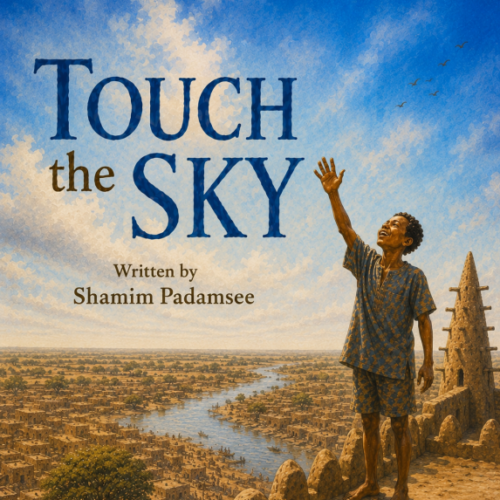
Touch the Sky
Country: Mali
Ages: 10-12 years
Author: Shamim Padamsee
Publisher:
Illustrator: AI-generated
Story Source:
Story Discussion Guide
Before reading
- What does courage mean? Does being courageous mean that a person is not afraid of anything?
- Have you ever been afraid to try something for fear of failing, being embarrassed or getting hurt? What did you do? Did anyone help?
- Can fear sometimes protect us? When might it prevent us from doing something worthwhile?
- What might help a person act even when fear has not disappeared?
- Show a large photograph of the Great Mosque of Djenné without naming it. Ask children to write on sticky notes what they see, what they think it is, and what they wonder. Collect the notes on a class wonder wall to revisit during the unit.
- What can buildings tell us about the climate in which they were constructed?
- Which local materials might builders use in a desert, floodplain, snowy region or tropical climate? Ask students to compare materials, climate response and cultural influences. How can a building express the culture and way of life of its community?
- Is a modern building necessarily better than a traditional one? Why or why not?
- What might happen if the knowledge required to maintain a traditional building is lost?

During reading
- Why did Moussa conceal his fear from his family and community?
- What does Nene mean when she warns that fear can become Moussa’s master?
- Is conquering fear the same as making it disappear?
- Does her advice support Moussa, pressure him, or, encourage him?
- Should people always confront their fears? When would caution be wiser?
- Why do you think the people were happy to take part in the restoration of the Grand Mosque year after year?
- Is the Crépissage merely a repair job? What else does it represent?
- What knowledge and skills are being passed between generations?
- What might be lost if repairs were handed entirely to an outside company?
- What does the restored mosque represent to the community?

After reading
- Was Moussa courageous only at the top, or from the moment he placed his foot on the first toron?
- Which helped him most: Nene’s words, Mariam’s encouragement, watching the workers or remembering his earlier experience?
- What practical steps can someone take when a challenge feels overwhelming?
- Why preserve old buildings instead of replacing them with newer ones?
- Who should decide which buildings deserve protection?
- Does a heritage building belong principally to its community, its country or all humanity?
- Can international recognition help a place while also creating difficulties?
- What makes a building sustainable?
- Does using a natural material automatically make a building sustainable?
- What environmental advantages might earth construction offer?
- What challenges can earthen buildings face during heavy rain, flooding or inadequate maintenance?
- Is annual repair evidence of failure—or of a different approach to maintenance?
- Could architects combine traditional knowledge with modern engineering?
- Should the same architectural style be used everywhere?

Comments
There are no comments
Leave a Reply
You must be logged in to post a comment.


Sign up to receive notifications whenever we
release new books
Share this post