

Untitled design (53)
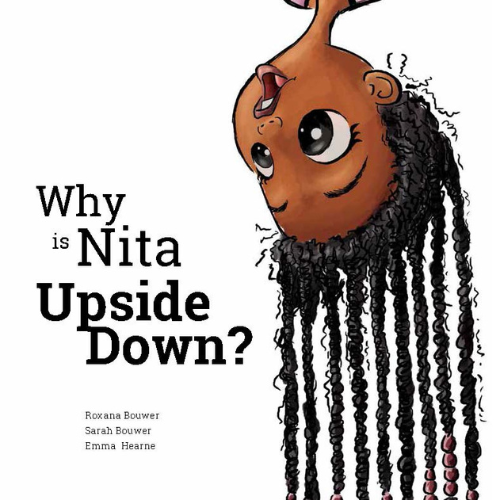
Why is Nita Upside Down?
Average Rating: 0.0
Country: South Africa
Ages: 5-8
Author: Roxana Bouwer
Publisher: Book Dash
Illustrator: Sarah Bouwer
Story Source:

About The Story

Nita is new to school and feels everything around her is upside down. She worries that her stammer will make her stand out and be ridiculed. Feeling isolated, Nita keeps to herself until a kind classmate, Navi, reaches out to her. Through his gentle friendship, Nita begins to see that everyone is different in their own way—some are tall, some are short, some speak differently, and some have abilities others do not. By the end of the story, Nita learns that being different is not something to hide, but something to embrace.

Themes

Inclusion & Disability
Social & Emotional Learning (SEL)

Sub Themes

Stuttering/Disfluency
fear of rejection

Parent-Teacher Guide

Learning Outcome

  • Develop empathy for peers who may feel different or excluded
  • Understand that differences—physical, emotional, or communicative—are part of being human
  • Learn the value of kindness and friendship in creating inclusive spaces
  • Build confidence in expressing and accepting their own uniqueness

Lesson Plan

  • This lesson uses Why is Nita Upside Down? to help students explore self-acceptance, uniqueness, and inclusion.
  • Through guided discussion, reflection, and a creative art activity, children learn to recognize their own strengths and appreciate differences in others.

Story Discussion Guide

Applicable Sustainable Development Goals

SDG 3 – Good Health & Wellbeing

The story addresses emotional wellbeing by acknowledging Nita’s anxiety, fear of being judged, and gradual growth in confidence. It encourages children to talk about feelings, seek support, and develop empathy for others’ emotional challenges.

SDG 4 – Quality Education

By promoting inclusive classrooms and respectful peer relationships, the story supports holistic education. It highlights the importance of safe learning environments where every child feels valued and able to participate.

SDG 10 – Reduced Inequalities

Nita’s stammer represents an invisible difference that can lead to exclusion. The story challenges stigma around disabilities and differences, helping children understand fairness, acceptance, and the importance of standing up for inclusion.

Comments

There are no comments

Leave a Reply

Sign up to receive notifications whenever we
release new books

Share this post
Start typing and press Enter to search

Shopping Cart
Sign up with Google