

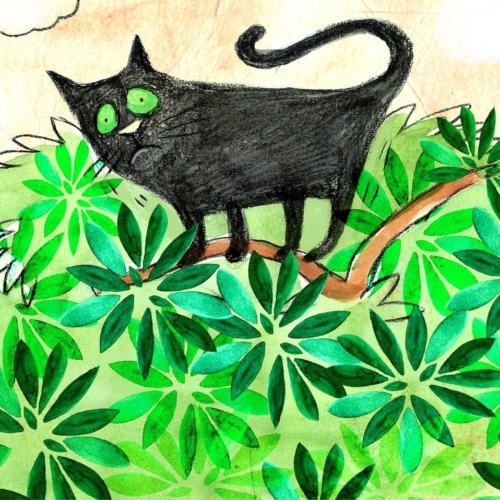
It's All the Cat's Fault
Country: India
Ages: 5–8
Author: Anushka Ravishankar
Publisher: Pratham Books
Illustrator: Priya Kuriyan
Story Source: Story Weaver
Lesson Plan
- Before Reading: Discuss creative excuses.
- During Reading: Track cause-and-effect and predictions.
- After Reading: Explore responsibility and alternative choices
- Activities: Sequencing, role-play, silly excuses, responsibility charts.
Activities
- The Excuse Chain: Seat children in a circle. Begin with : “I could not finish my homework because a bird flew through my window.” Each child adds one connected event. The new event must follow logically from the one before it. End by reconstructing the whole chain and identifying the cause-and-effect links.
- Around the World Same Feeling : Show or name several school settings from different parts of the world. In pairs, children imagine a child in each setting arriving without an assignment. Children could read the story, “My Sister’s Big Day” and based on the setting write made-up and real excuses on why they could not do their homework.
- Comic Strip Cause and Effect : Children divide a page into six panels and illustrate six linked events from the story or invent a new chain. Under each panel, they write “Because…” or “So…” to make the connections clear. Invite volunteers to perform their comic strips dramatically.
- An Honest Ending : Children write or role-play a new ending in which the boy tells the truth, accepts responsibility, and proposes a solution. The teacher responds with both understanding and a reasonable consequence. Compare how honesty changes the conversation.
Story Discussion Guide
Before reading
- Have you ever forgotten something you needed for school? How did you feel?
- What is the difference between giving a reason and making an excuse?
- Children in many countries are asked to complete work at home. What might be similar or different about their experiences?
- What is the funniest excuse you can imagine for unfinished homework? Make it clear that the answer may be completely invented.

During reading
- What problem begins the chain of events?
- After each event, ask: What happened because of this? What do you predict will happen next?
- At what point does the explanation become difficult to believe? Why?
- How does the storyteller make each new event connect to the one before it?
- Do you think the boy expects his teacher to believe him, or is he enjoying telling the story? What makes you think so?

After reading
- Which event was the funniest or most surprising? Explain your choice.
- Could any part of the boy’s story have happened? Which parts seem invented?
- Why might someone try to cover up a mistake or something they have forgotten instead of telling the truth? What might happen if they tell the truth, and what might happen if they give an excuse?
- How could the teacher respond in a way that is both kind and fair?
- The boy’s home and circumstances may differ from yours, but which of his feelings or experiences do you recognize?
- Do you think children in other parts of the world also invent excuses? What does this suggest about the things children share?
- What could the boy say or do next to take responsibility?

Explore Other Related Stories
Comments
There are no comments
Leave a Reply
You must be logged in to post a comment.


Sign up to receive notifications whenever we
release new books
Share this post