

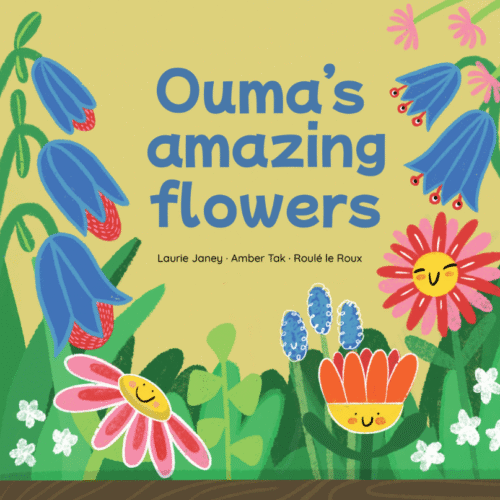
Ouma’s Amazing Flowers
Country: South Africa
Ages: 3-5
Author: Jaco Jacobs
Publisher: Book Dash
Illustrator: Ester Steyn
Story Source:
Lesson Plan
- This lesson encourages sensory engagement, global connections, and emotional expression using the story of rainfall.

Activities
- What children do : Create a small book showing how every flower can hold a “surprise,” just like in Ouma’s garden.
- Ages 3–5 :- Fold a few sheets into a booklet (teacher-prepared).
- - Children draw large flowers and add textures (stickers, tissue, crayons).
- - Teacher asks guiding questions:- What color is your flower?- Is it soft, tall, or tiny?
- - Teacher writes down the child’s words.
- Ages 5–8 :Children design their own pages.
- - Storyboard scenes showing the family’s resilience.
- - Kindness Contracts: Create a class inclusion pledge.
- - Understanding Inequalities: Discuss how poverty affects education.

Story Discussion Guide
Before reading
- Observe the cover and title. Ask: “What makes flowers amazing?”
- Invite children to share stories about time spent with grandparents or gardening.

During reading
- Pause on each new flower: “What do you think might be inside this one?”
- Encourage sensory guessing (smell, touch, sight).

After reading
- Reflect: “Which flower surprised you most?”
- Ask: “Why do you think Ouma wanted to show all these flowers?”
- Connect emotions: “How did this story make you feel?

Comments
There are no comments
Leave a Reply
You must be logged in to post a comment.


Sign up to receive notifications whenever we
release new books
Share this post